
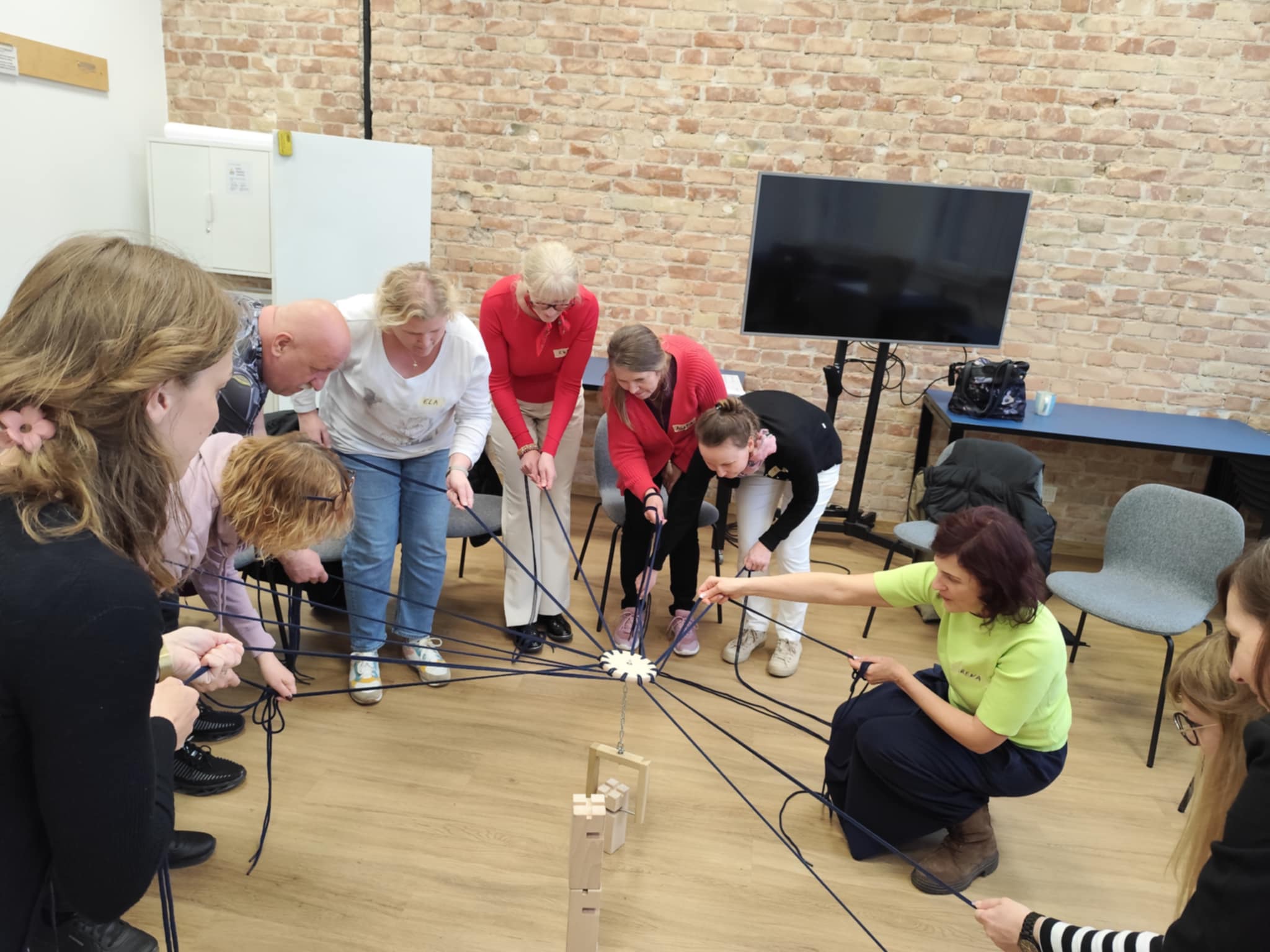
In 2025, we implemented a training and supervision project addressed to teachers, intercultural assistants, and professionals working in educational and pastoral roles in Gdańsk schools. The project aimed to strengthen competencies related to creating safe and inclusive educational environments for students with diverse social and cultural backgrounds, while also providing meaningful support to those working daily in a demanding school context.
The project included a series of in-person trainings delivered in two editions: spring and autumn. Each session lasted four hours and was based on non-formal education methods, with a strong focus on experience, reflection, and the practical application of knowledge in everyday school practice.
- 23 April 2025 – Team Building
How to support integration in the classroom and at school, understand group dynamics and team roles, and build cooperation in diverse teams. - 14 May 2025 – Intercultural Communication
Working with one’s own cultural conditioning, communication styles, and “norms” that are not always obvious in a diverse environment. - 17 June 2025 – Unconscious Bias
Mechanisms of bias, heuristics, and cognitive errors, and their impact on relationships, decision-making, and work with students. - 8 October 2025 – Acculturation Stress and Building Student Resilience
Recognising minority stress, responding to tension and withdrawal, and strengthening students’ sense of safety. - 30 October 2025 – Emotional Intelligence
Working with emotions in school relationships and understanding their role in communication and decision-making. - 3 December 2025 – Accessibility in the Classroom
Content accessibility, plain language, and everyday solutions supporting work in diverse classrooms.
A total of 92 people participated in the trainings, many of whom attended more than one session. Participants particularly valued the practical exercises, the sense of safety during the meetings, and the opportunity to exchange experiences with people holding different roles within the school system.
Supervision: a space for difficult topics
An integral part of the project was individual and group supervision, which proved to be one of the most valuable elements of the entire process. During supervision sessions, participants addressed real challenges from their daily work, including working with neurodiverse groups, stress and emotional overload, relationships with parents, boundaries in helping professions, burnout, peer conflicts and violence, the role of intercultural assistants, and the inclusion of children with migration experience.
The trainings and supervision not only provided knowledge and tools, but above all strengthened the sense that integration in schools is possible—provided it is approached as a process based on relationships, reflection, and mutual support.
For us, the “Inclusive School” project confirmed that investing in the competencies of educational staff, as well as in supervision as a developmental tool, has a real and long-term impact on the quality of education and the wellbeing of the entire school community.


The project is co-financed by the City of Gdańsk.